
A recent SBI Economic Research report indicates that the significant gap between credit and deposit growth, currently over 530 basis points, is likely to persist if geopolitical risks and external supply shocks continue. However, an improvement in deposit growth is anticipated with inflows into foreign currency non-resident (bank) deposits.

State Bank of India's latest report highlights a 'chalk and cheese' divide in the Reserve Bank of India's recent policy communications, with the Monetary Policy Committee minutes showing a hawkish tone while the Governor's statements are more data-dependent, leading to market uncertainty regarding future interest rate hikes.

Economists widely anticipate the Reserve Bank of India's Monetary Policy Committee will increase the repo rate by 50 basis points, likely split between the October and December meetings, as retail inflation is projected to peak at 6.1 per cent in the third quarter, exceeding the RBI's tolerance limit.

Members of the Reserve Bank of India's (RBI) Monetary Policy Committee (MPC) have indicated that interest rate hikes may be necessary sooner rather than later, as headline inflation is projected to rise from its current benign levels in the coming months, according to the minutes of the August review.

India is projected to attract between $80 and $85 billion through the Reserve Bank of India's (RBI) concessional swap facility, designed to boost foreign currency inflows, according to an SBI research report.

Union Finance Minister Nirmala Sitharaman announced the government's plan to establish a high-powered committee to examine reforms for the banking sector, aligning it with the vision of a 'Viksit Bharat' (Developed India) and India's next phase of growth.
Commercial banks in India recorded their highest credit growth in two years, accelerating to 18.6 per cent year-on-year by June 27, while also mobilising nearly 7 trillion in deposits, marking the third-highest fortnightly deposit growth in 29 years.

Shares of Indian life insurance companies, particularly SBI Life Insurance and Canara HSBC Life Insurance, saw significant declines after the Department of Financial Services (DFS) secretary, M Nagaraju, stated that banks are being asked to avoid exclusive tie-ups with their own insurance subsidiaries and instead remain neutral.

As the poverty rates in the country declined below 5 percent in 2024, a research study by State Bank of India also highlighted that the extreme poverty in the country has been reduced to minimal.

The rupee breached 90-levels against the greenback for the first time on Wednesday, falling 6 paise to 90.02 in early trade, as banks kept buying US dollars at higher levels and FII outflows continued.

Fixed deposits from nationalised banks delivered higher returns than equities, outperforming both inflation and stock market benchmarks.

The argument that India is going towards a 'Hindu rate of growth' is "ill-conceived, biased and pre-mature" when weighed against the respective data on savings and investments, said SBI Research in its Ecowrap report. The term Hindu rate of growth was coined by economist Raj Krishna in 1978, which denoted the economic growth of about 3.5-4.0 per cent in terms of GDP during 1947-1980. "India's quarterly sequential Y-o-Y GDP growth has been in a declining trend in FY23.

'Long-term investors seeking sustainable gains from resilient, fundamentally strong companies may go for these funds.'

The GDP growth is expected to be about 6.3 per cent in the current fiscal year, a tad lower than the government's estimate of 6.4 per cent, owing to several factors such as weak demand, SBI research report said on Wednesday. According to the first advance estimates (FAE) of National Income for 2024-25 released by the National Statistics Office (NSO), released on Tuesday, India's economic growth rate is estimated to slip to a four-year low of 6.4 per cent in 2024-25, because of poor showing by the manufacturing and subdued investments.

The per capita income of Indians as gleaned from income-tax filing is expected to increase from Rs 2 lakh in FY23 to Rs 14.9 lakh in FY47, coinciding with 100 years of the country's Independence, according to SBI Research. In dollar terms it will increase from about $2,500 in FY23 to $12,400 in FY47. Soumya Kanti Ghosh, group chief economic adviser, State Bank of India, said the weighted mean income was Rs 4.4 lakh in AY14. That rose to Rs 13 lakh in FY23.

Finance Minister Nirmala Sitharaman's biggest challenge will be to find a new growth driver, particularly against the backdrop of a global economy ravaged by heightened uncertainty and fragmentation, financial markets on a precipice, and global commodity prices on a continued uptrend.

It is to be seen if SBI under Setty, who will have a three-year term, can ride the economic cycle to take SBI to new heights, navigating some of these challenges.

India's economic growth is expected to be lower at 6.3 per cent this fiscal compared to the RBI's projection of 6.5 per cent, a SBI Research Report said on Thursday. The report pegged the first quarter GDP estimate at around 6.8-7 per cent, mainly due to muted private capex.

Reserve Bank of India (RBI)Governor Sanjay Malhotra on Friday said it was not the regulator's job to take decisions for bank boards, speaking in the context of the wide range of enabling reforms announced for lenders during the October monetary policy review, and emphasised that financial stability remained the regulator's focus.

Say their aggregate borrowings were "well within the norms"
The report also described the RBI as an "extremely visionary, pragmatic and fairly independent" organisation throughout its history

Pencilling in a GDP growth in third and fourth quarters, SBI Research on Wednesday revised its contraction forecast for the current fiscal year to 7 per cent. The agency had earlier forecast a 7.4 per cent contraction in 2020-21 GDP numbers. In April-September, the economy contracted 15.7 per cent but the second half may see a surprise 2.8 per cent growth, if the SBI analysis turns out to be correct.

The price hikes during Covid were more because of supply chain and logistics disruptions caused by the pandemic and the Ukraine war rather than firms increasing prices because of higher pricing power, a report by State Bank of India (SBI) said. "It is thus incorrect to infer that concentration power dictated pricing capacity of firms, thus resulting in unyielding core inflation," the report authored by Soumya Kanti Ghosh, group chief economic adviser, SBI, said. A recent research article by former Reserve Bank of India (RBI) deputy governor Viral Acharya had observed that persistence of core inflation in India is due to purchasing power of top-five corporate houses.

Net job creation in the economy fell by 16.9 lakh in FY21 over the previous fiscal, shows an SBI Research analysis of EPFO payroll data. However, the FY21 numbers are better than the FY20 net job creation, which had declined by 28.9 lakh, further cementing the view that the economy is not creating new employment opportunities. The latest EPFO data shows that net new EPF subscribers stood at 94.5 lakh in FY21, and NPS added 5.82 lakh, taking the cumulative net addition to 100.4 lakh, which is marginally down from 102.3 lakh in FY20.
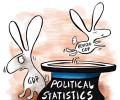
The SBI report, however, said the economic growth rate will pick up pace in 2020-21 to 6.2 per cent.

The net financial savings of the household sector has moderated to 5.1% of GDP in FY23 from 7.6 per cent in FY20, as households shifted their savings to physical assets amid low interest rates during the pandemic, according to State Bank of India's (SBI) Research report.

This may free up resources for productive or lending purposes.

Income velocity based on currency with the public went down from 0.93 in October to 0.84 in March says a report from SBI's economic research department

SBI Research has projected the Indian economy to grow at 7.5 per cent in 2022-23, an upward revision of 20 basis points from its earlier estimate. As per official data, the economy grew by 8.7 per cent in FY22, net adding Rs 11.8 lakh crore in the year to Rs 147 lakh crore, the report said, adding this was however only 1.5 per cent higher than the pre-pandemic year of FY20. "Given the high inflation and the subsequent upcoming rate hikes, we believe that real GDP will incrementally increase by Rs 11.1 lakh crore in FY23. "This still translates into a real GDP growth of 7.5 per cent for FY23, up by 20 basis points over our previous forecast," SBI chief economist Soumyakanti Ghosh said in a note on Thursday.

Credit card spending in September recorded strong growth of 25 per cent year-on-year (Y-o-Y), marking the highest increase in six months. Even as many banks saw higher slippages during the July-September quarter of 2024-25, spending growth exceeded 20 per cent for the first time since February. According to the latest data released by the Reserve Bank of India (RBI), September spending reached Rs 1.76 trillion, compared to Rs 1.42 trillion in the same period a year ago. In August 2024, credit card spending was Rs 1.68 trillion.

10 largecaps stocks which stand to gain from the Budget.

RBI's interest rate decision, quarterly earnings and global cues would be the major driving factors for equity markets this week, analysts said adding that the impact of the Union Budget could linger on this week. Trading activity of foreign investors will also be a key driver for the markets, experts noted. "US and India's manufacturing PMI for January to be released on Monday, will be the key macro data to watch out for.

By democratising access to finance, empowering women and marginalised groups, and adapting to India's diverse regional landscapes, PMMY has helped fortify the country's grassroots growth engines, says Chief Economic Advisor to the Government of India, V Anantha Nageswaran.
The SBI report ruled out a October rate hike
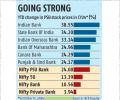
Stock Market News today, PSU banks: The year 2024 was a roller-coaster ride for Indian stock markets, marked by volatility driven by the Lok Sabha elections, Union Budget 2024, a slowdown in corporate earnings, and sticky inflation. Geopolitical tensions - particularly between Israel and Iran in West Asia - along with various stimulus announcements by China and yen carry trade rocked the equity markets throughout the year.

Quant funds are a unique offering in the MF space as the investment decisions are driven by a blend of active and passive strategies.
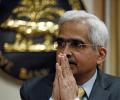
The RBI's rate-setting panel MPC on Monday began its three-day deliberation amid expectations of another round of hike in benchmark interest rates to contain inflation that continues to remain above the central bank's upper tolerance level. RBI Governor Shaktikanta Das will announce the decision of the Monetary Policy Committee after deliberations on Wednesday. Das has already indicated that there may another hike in the repo rate, though he refrained from quantifying it.

The country's gross domestic product (GDP) is likely to grow at 5.8 per cent in the third quarter of fiscal 2022, according to an SBI's research report- Ecowrap. The country's economy expanded by 8.4 per cent in the second quarter of 2021-22, to cross pre-pandemic levels. However, the GDP growth in July-September period was slower than the 20.1 per cent expansion in the previous quarter.

The country's gross domestic product (GDP) is expected to grow at around 18.5 per cent with an upward bias in the first quarter of the current financial year, according to SBI research report Ecowrap. This estimate is lower than the Reserve Bank of India's GDP growth projection of 21.4 per cent for the April-June quarter. "Based on our 'Nowcasting' model, the forecasted GDP growth for Q1 FY22 would be around 18.5 per cent (with upward bias)," the report said. Higher growth in Q1 FY22 is mainly on account of a low base.

The report said that "we believe, institutions are more important than individuals" and ultimately what is important is the credibility and the independence of any institution and nothing else.
